How to use up leftover ingredients after meal prep
Half a can, a handful of spinach and a spare pepper can all go into next week or the freezer. Where each common leftover goes.

Photo by Annie Spratt on Unsplash
Most recipes leave something behind. Dealing with it on the same day stops it being wasted.
Where do common leftovers go?
- Half a can of beans or tomatoes: freeze in a small bag for the next soup or chili.
- Spinach or kale: stir into eggs, curry or pasta, or freeze for smoothies.
- Half an onion or pepper: dice and freeze for cooking later.
- Fresh herbs: chop and freeze in oil in an ice cube tray.
- Cooked rice: freeze flat in portions.
- Coconut milk: freeze in an ice cube tray.
- Tomato paste: freeze in tablespoon portions.
- Bread and tortillas: freeze with baking paper between them.
- Ginger: freeze whole and grate from frozen.
- Lemon or lime halves: juice them and freeze the juice.
What should you do on cooking day?
Spend five minutes at the end of the session. Bag and freeze the part-used cans, wrap the cut vegetables and write a note of what is left. It is much easier than finding them a week later.
How do you plan next week around them?
Look at what is left before writing the list. Pick those ingredients in the recipe generator, and it ranks recipes by how much you already have and lists what to buy.
What are good clear-out meals?
Dishes that accept almost any combination.
- Fried rice, with day-old rice, an egg and any vegetables.
- Soup, with beans, broth and whatever is in the drawer.
- Frittata or egg and veggie muffin cups, which take any cooked vegetable.
- Burrito bowls, following black bean and corn burrito bowls.
- Pasta with a quick sauce from leftover tomatoes and vegetables.
How do you avoid leftovers in the first place?
Choose recipes for the week that share ingredients. If one uses half a bunch of kale, pick another that uses the rest, such as white bean and kale soup. The week planner combines the amounts across recipes, so you can see when two recipes use up a whole pack between them.
Is it safe to freeze opened cans?
Freeze the contents, not the can. Tip them into a bag or container first. Beans, tomatoes, coconut milk and broth all freeze well.
What about cooked leftovers?
The same rules apply as for any meal prep. Cooked food should be eaten within three to four days or frozen. See how long meal prep lasts.
Which leftovers are not worth keeping?
Salad leaves that have been dressed, cut avocado and anything that has been at room temperature for more than two hours.
What does this save?
Wasted food is money already spent. Using it lowers the next shop directly. See how meal prep cuts your grocery bill.
Where to go next
Buying vegetables that do not spoil helps too. See frozen or fresh vegetables.
More budget guides
See all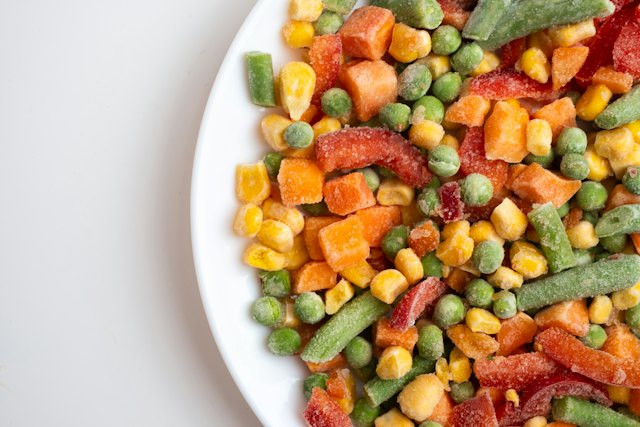
Frozen or fresh vegetables for meal prep?
Frozen vegetables are cheap, already cut and do not spoil. Use fresh where crunch matters. Which to buy for each kind of dish.
How meal prep cuts your grocery bill
You buy only what the plan needs, you waste less and you buy fewer lunches out. Six habits that lower the weekly shop.

A budget meal prep pantry: 15 staples to keep
With these 15 staples in the cupboard, most weeks need only fresh vegetables and one protein. What to keep and how to build it up.